

Compare Alternatives
Run a preference test on text or creative options with a consistent audience.
このページの翻訳はまだありません。英語の原文を表示しています。
A preference test compares alternatives under one question. It can help narrow messages, concepts, names or designs for a later real-world test.
Set up the alternatives
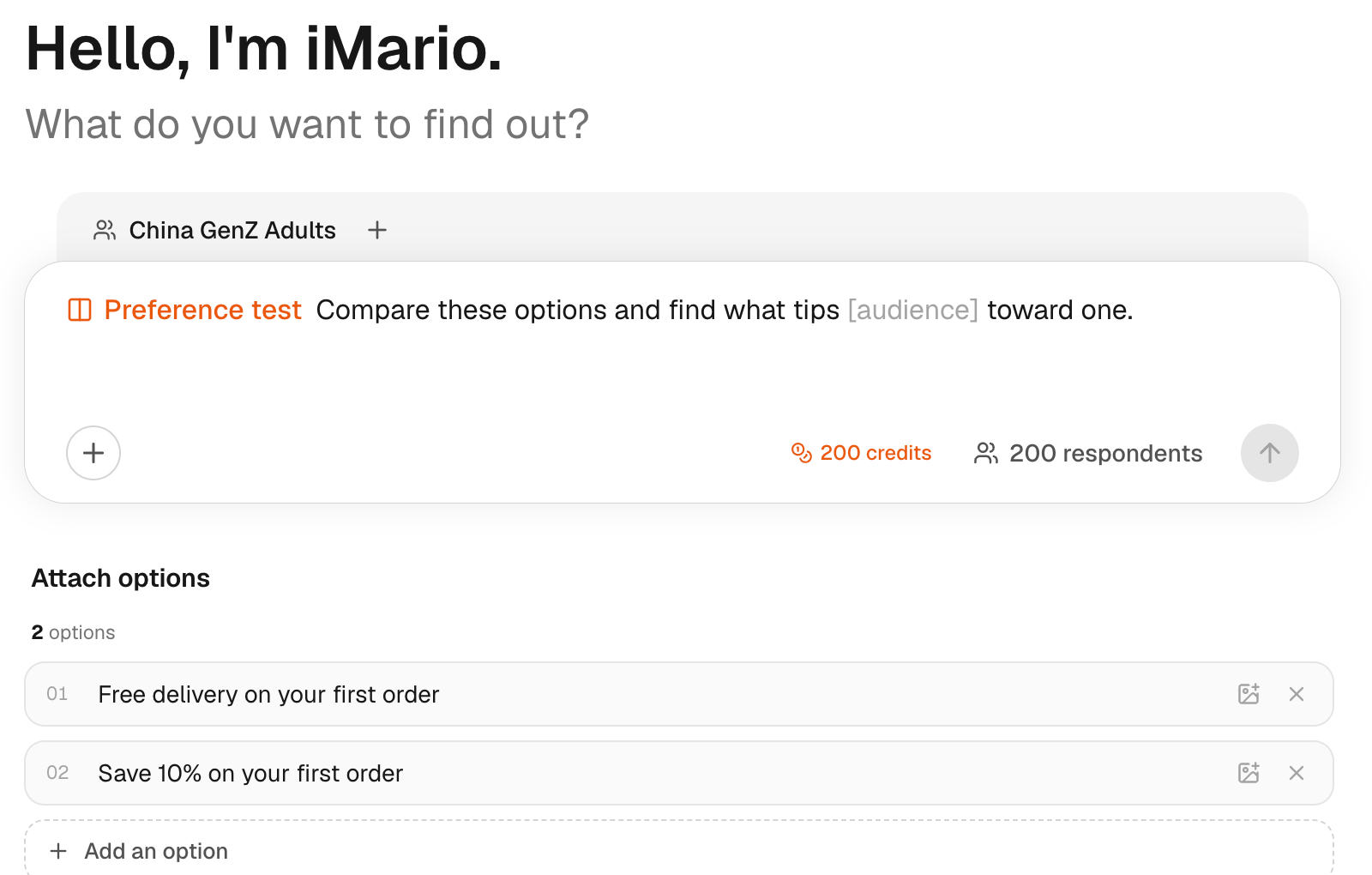
Open New Task and choose Preference test. Select the audience, then write what you want to learn. Add at least two options in the rows below the composer.
For example, ask which offer a reader would investigate first:
- “Free delivery on your first order.”
- “Save 10% on your first order.”
Keep each option complete enough to evaluate. Use consistent names so you can recognize the versions in the result. An option may include an image; an image-only option is also valid and receives an option label.
Set the respondent count and choose Run comparison after reviewing the scope.
What would you like to find out?
Which offer would you investigate first?
Preview only · no research is submitted
Compare two alternatives
Use the selector above the composer. Read the definition before selecting.
Make the comparison interpretable
Keep the audience and question the same for every option. If alternatives vary in several ways, describe the outcome as a preference for the whole version. It does not isolate the effect of one headline or visual change.
Read the preference distribution by audience, then inspect reasons and minority responses in Explorer. A narrow gap is a reason to investigate, not a guaranteed winning version. This workflow does not use the retired Studio three-reviewer tournament.
Cost
A text-only preference test costs 1 credit per respondent. A visual preference test costs 2 credits per respondent. This is different from a multi-select survey question, which charges per option. See Pricing & credits.
For repeated iterations, keep a record of what changed. Confirm performance using a real test with an appropriate outcome, rather than reporting synthetic preference as predicted conversion. See Validate with real data.