

Interpret Evidence
Distinguish source data, modelled answers, respondent agreement and real-world validation.
このページの翻訳はまだありません。英語の原文を表示しています。
A useful finding makes its evidence visible. In synthetic research, that means separating what was observed from what was inferred and what the current study simulated.
Identify the source
| Evidence | What it supports | What it does not establish by itself |
|---|---|---|
| Demographic statistics | Population composition within the source's scope | Attitudes about a new product |
| Real survey answers | Responses to the original questions, in that sample and period | The answer to a materially different question today |
| Customer records | Recorded characteristics and events | Unrecorded motives or preferences |
| Interview or feedback text | The language and experiences in that source | How common those views are in the whole market |
| Modelled answers | A simulated response to the supplied question and context | An observed action or guaranteed future outcome |
An audience can combine several evidence types. Inspect its definition and sources, then inspect the material and question in your run.
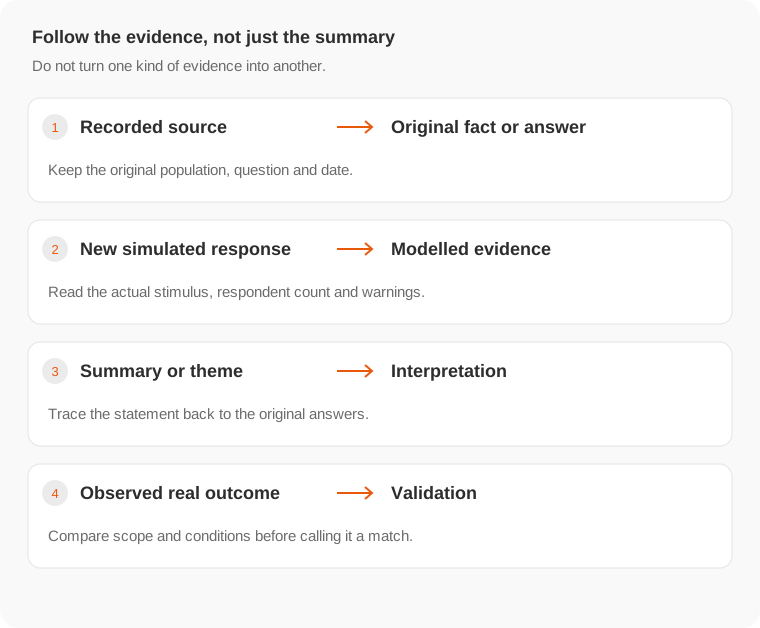
Agreement is not accuracy
Respondents agreeing with each other is a pattern within the simulation. It does not independently verify the answer. Increasing the panel size may improve coverage of represented subgroups but does not correct a shared modelling error.
Likewise, a high score on a benchmark is measured on that benchmark's datasets and tasks. It is not a probability that any new finding is correct.
Read the denominator
Distinguish people, answers, coded mentions and selected subgroups. One person may mention several themes; percentages of mentions need not equal percentages of respondents. Filters change the group being described.
Do not treat missing, suppressed or unavailable values as zero. When comparing runs, check question wording, source population, timing and stimulus.
Make the claim match the evidence
Prefer “this modelled audience raised these concerns under this stimulus” over “customers will reject the product”. For a precise commercial claim, test against observed outcomes with real validation.
The public benchmark describes measured performance. About the benchmark explains how to read different metrics without combining them into one universal accuracy claim.