

Run a Focus Group
Hear simulated participants discuss topics together and inspect how the conversation develops.
このページの翻訳はまだありません。英語の原文を表示しています。
A focus group seats participants together with a moderator. Use it when disagreement, reactions to other people and changes of position matter. Use Interview for independent one-to-one accounts.
Set up the discussion
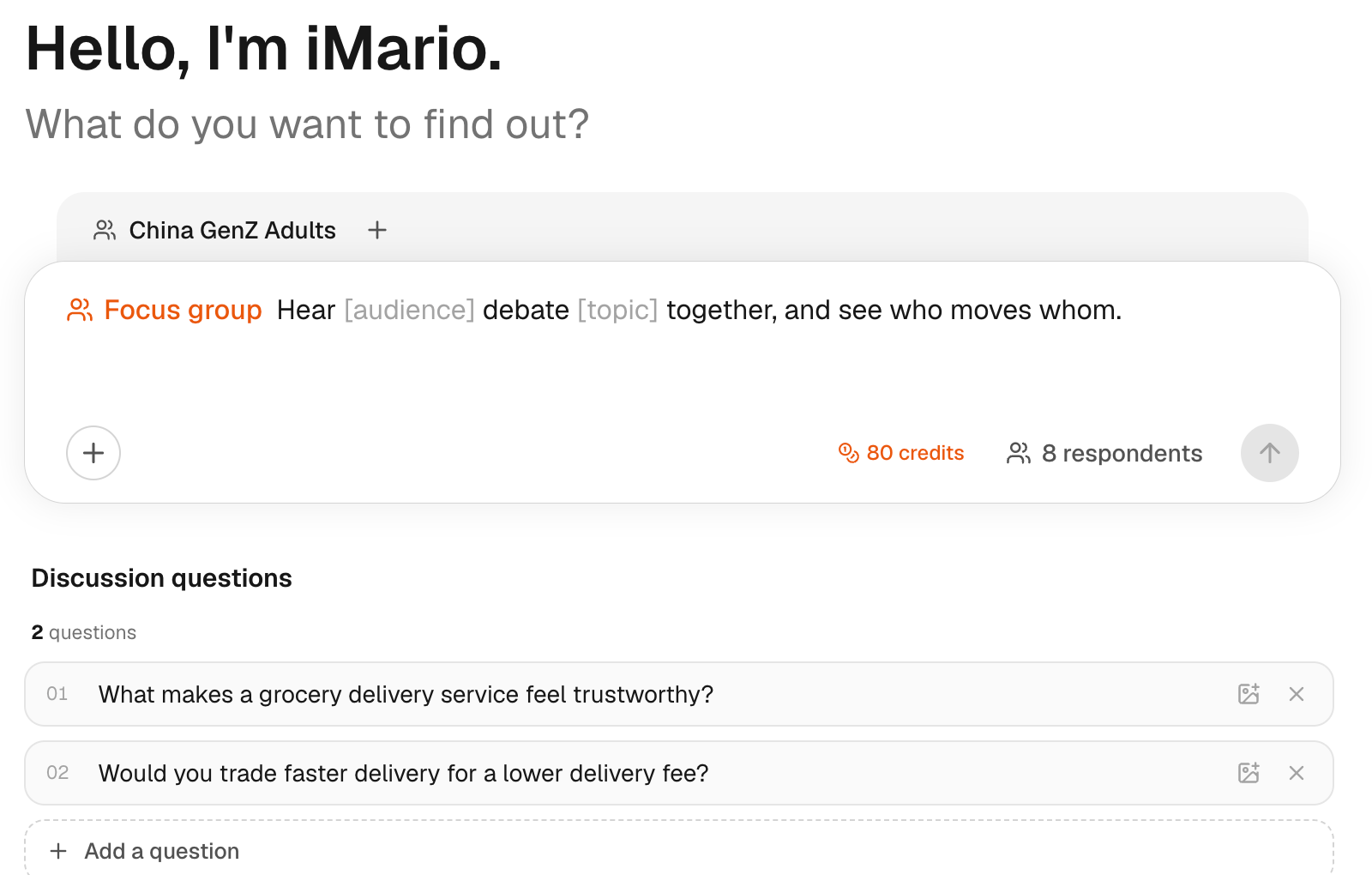
- Open New Task, choose Focus group, and select the audience or audiences.
- Write the research goal in the composer.
- Add ordered discussion questions. For example: “What makes this offer believable?” followed by “Which objection would prevent you from trying it?”
- Attach an image to a topic if the discussion needs a visual stimulus. Keep a written question with the image.
- Review the participant count, topics and cost, then choose Run focus group.
A group seats 3 to 8 participants. The runner accepts up to 12 topics; if a longer list is reduced, inspect the run's warning and the topics actually discussed. More people in a selected audience do not turn one table into a large survey.
What would you like to find out?
Discuss what makes this offer believable
Preview only · no research is submitted
Set up a focus group
Use the selector above the composer. Read the definition before selecting.
Read a discussion, not just votes
Follow who introduces an idea, who challenges it, and whether later answers merely echo a dominant participant. Read the transcript alongside the summary. A group reaching agreement after discussion differs from independent respondents reaching the same answer.
When comparing segments, consider separate groups with the same topics so each group's dynamics remain visible. Do not interpret one participant as representative of an entire segment.
Cost and next steps
The charge is 5 credits per seated participant per topic discussed. Eight participants and three topics cost 120 credits before report generation. Calculate from the actual topic list and seated group; see Pricing & credits.
If the discussion becomes unfocused, narrow the next group's topics. Use reports to synthesize completed work, preserving quotations and disagreements rather than treating consensus as a measured population preference.