

Core Concepts
Understand audiences, individuals, tasks, runs, materials and reports.
此页译文尚未提供,当前显示英文原文。
These terms describe different parts of the research workflow. The distinction helps you select data, estimate cost and return to earlier work.
| Concept | Meaning |
|---|---|
| Workspace | The space containing your research, audiences and materials. |
| Project | An organizational grouping for work in a workspace. |
| Task / conversation | The context in which you work on a research goal, inspect results and continue asking questions. |
| Run | One research execution with a defined audience and scope. A conversation can contain several runs. |
| Audience | The population or segment being modelled, together with its definition and data basis. |
| Respondent | A simulated participant in a particular run. |
| Synthetic Individual | An individual whose profile you can inspect and who may be available for direct chat. |
| Survey | A saved questionnaire for structured responses. |
| Discussion Guide | An interview instrument, including questions and prompts for deeper exploration. |
| Library | Reusable surveys, guides, images, documents and reports. |
| Knowledge Base | Background material connected to individuals; distinct from data used to construct an audience. |
| Result | The output of a research run, available to inspect without first producing a narrative report. |
| Report | A separately generated synthesis over a selected scope of results. |
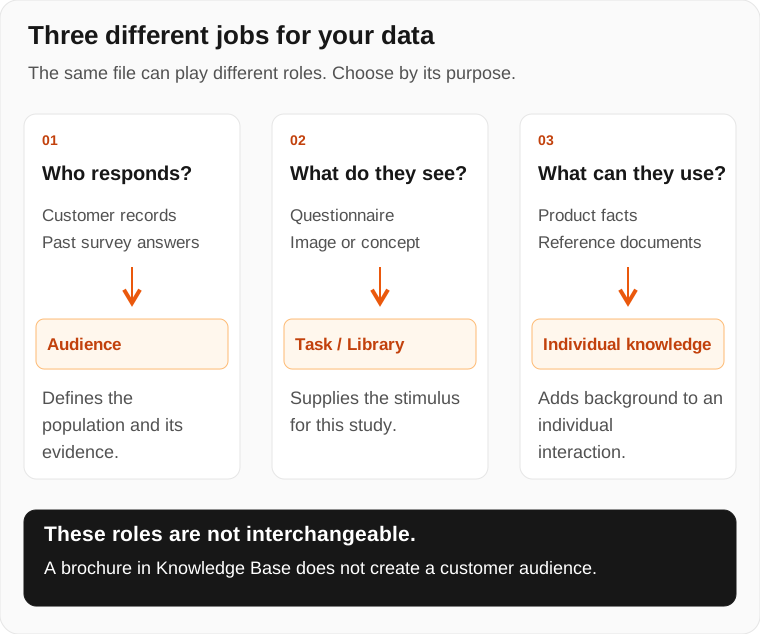
Three roles for your data
Audience evidence helps define the people and what is already known about them: customer records, survey responses, transcripts and connected sources.
Research material is what this study asks people to react to: a question, image, page or alternative concepts.
Individual knowledge is background a connected person can draw on in an interaction.
Uploading a product brochure to a Knowledge Base does not create a representative customer population. Selecting an audience does not automatically show it every workspace document. Choose the location by the role the material plays.
Access and usage
Some audiences require a separate access purchase. Research consumes credits, and generating a report may consume more. See Pricing & credits.
Continue with Your first study or Materials & connections.