

Run a Survey
Build or import a questionnaire, review its questions, and run it with a chosen audience.
Use a survey for several structured questions answered by a defined audience. A saved survey can be reused from Library.
Prepare the questionnaire
Open New Task, choose Survey in the + menu, and select an audience. Describe the goal, then use Draft survey, or attach a survey from Library. The goal says what you want to learn; the saved questionnaire contains what respondents actually answer.
The builder supports manual editing and import. Questionnaire import accepts PDF, DOCX, XLSX, CSV, TXT and Markdown. Export older binary Office formats to a supported format first.
Review before running
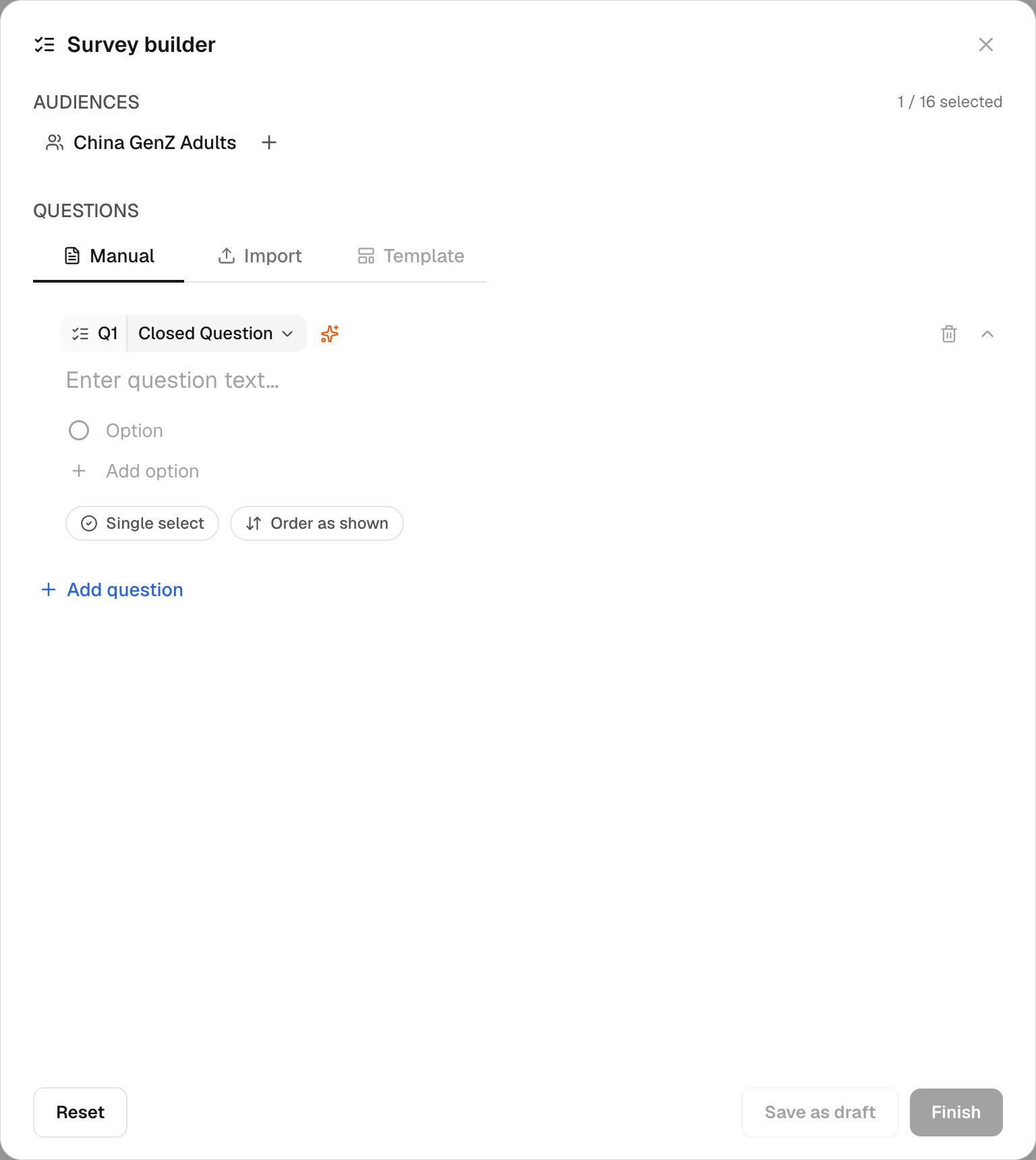
- Read every question and its response type.
- For closed questions, check options and whether multiple choices are allowed.
- For ranking questions, check each item.
- Remove leading wording, duplicates and instructions mistakenly parsed as questions.
- Save the survey, check the attached audience and set respondent count.
Review the full question list rather than relying on a count alone. Instruction blocks are not respondent questions. Split a long questionnaire when separate sections answer different decisions; this also makes the scope and cost easier to review.
What would you like to find out?
Understand grocery delivery barriers
Preview only · no research is submitted
Prepare a survey
Use the selector above the composer. Read the definition before selecting.
Run and analyze
Review the estimate and submit. Inspect individual questions, then use Explorer to investigate differences across answers and audiences. Inspect overlapping respondents when interpreting a cross-question pattern.
Cost and corrections
Single-choice questions cost 1 credit per respondent; open questions cost 2. Multi-select questions are charged per option, and rankings per item. See worked examples.
If an import looks wrong, fix it before running. Editing a saved survey prepares a future run; it does not correct answers already collected. Use Library to return to the instrument.